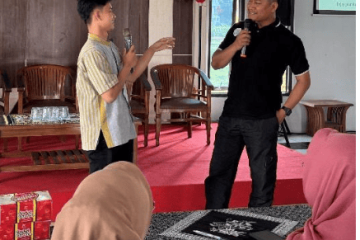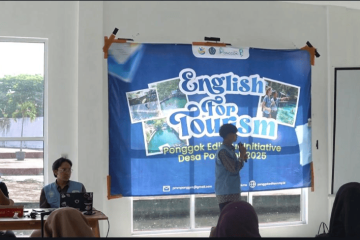
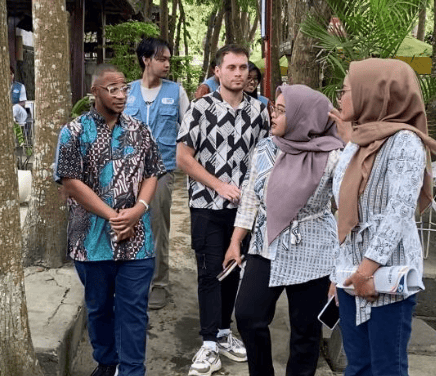
In order to actualize our main goal of implementing Glocalization in Ponggok Tourism Village through the Ponggok EdiTour Initiative, the English for Tourism program run by GenPeti has entered its real-practice phase. To provide a hands-on experience, GenPeti collaborated with two international students from the University of Muhammadiyah Surakarta (UMS), Maciej and Alwy. Maciej is an English Education student from Poland, and Alwy is an Islamic Education student from Kenya. They participated and played the role of tourists visiting three of Ponggok’s main destinations: Umbul Besuki, Umbul Ponggok, and Umbul Sigedhang. Their presence provided an opportunity for the staff to practice the knowledge they had learned in English for Tourism training by GenPeti. They have learned basic materials such as greeting and welcoming guests, providing information about facilities, showing directions, and handling complaints.
The activity began around 10 a.m., with the first destination being Umbul Besuki. Ms. Desi and Ms. Esti, staff representatives from the Umbul Besuki unit, took Maciej and Alwy on a tour of the expansive area while explaining the facilities. Despite initial nerves, the two staff members managed to establish effective communication with the foreign tourists. Ms. Esti herself thoroughly enjoyed this hands-on activity, which featured international students. Both staff members admitted they hadn’t prepared much and relied solely on the knowledge they gained from their English for Tourism training with GenPeti.
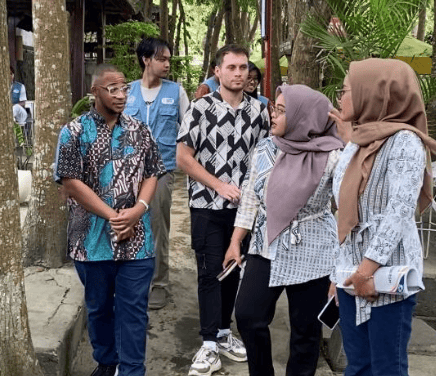
Figure 1 Guiding in Umbul Besuki
The trip continued to Umbul Ponggok, where the two students tried their underwater experience. The staff members in charge of guiding Maciej and Alwy at Umbul Ponggok are Mr. Beni and Mr. Kalingga. After briefly explaining Umbul Ponggok, the staff immediately asked Alwy and Machiej to change their clothes and wear their underwater gear to experience the breathtaking underwater view. On this occasion, Mr. Beni showed his English speaking skills as he provided safety instructions to Alwy and Machiej. However, he admitted that he had difficulty communicating during the activity, as he rarely uses English in his daily life. He stated that to be fluent in English requires a lot of practice, and there was no time and place to have a real conversation using English. He also revealed that during his guiding, he used some of the materials from the English for Tourism training, particularly welcoming or greeting phrases, such as “Welcome to Umbul Ponggok,” “Nice to meet you,” “Have a nice day,” and “Enjoy Underwater.”
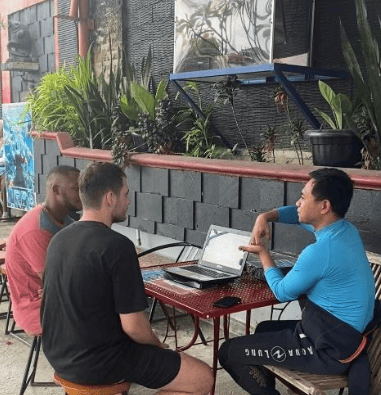
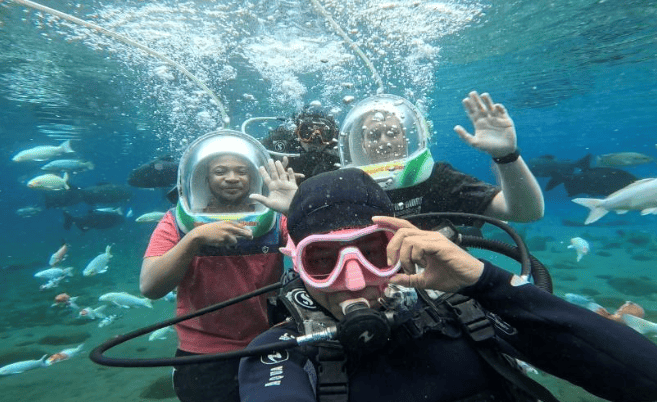
Figure 2 Guiding in Umbul Ponggok
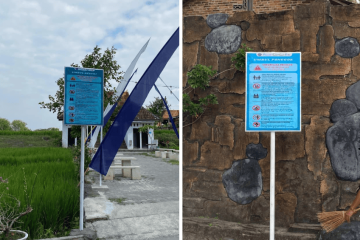
The last destination was Umbul Sigedhang, with four staff members on duty: Mr. Arnold, Ms. Widia, Ms. Nisrina, and Ms. Emma. Machiej and Alwy were warmly welcomed by the staff upon their arrival at Umbul Sigedhang. The staff introduced themselves, then toured the area to explain the watersprings and other facilities, and even offered Machiej and Alwy delicious, warm mendoan (fried tempe: soybean cake) and tea. The day ended with a group tubing session, after the staff introduced the area’s tourism potential. For the tubing session at Sigedhang, GenPeti students helped explain safety instructions to Machiej and Alwy. Mr. Arnold said he actually enjoyed this activity because it provided the opportunity to practice for learning a foreign language.
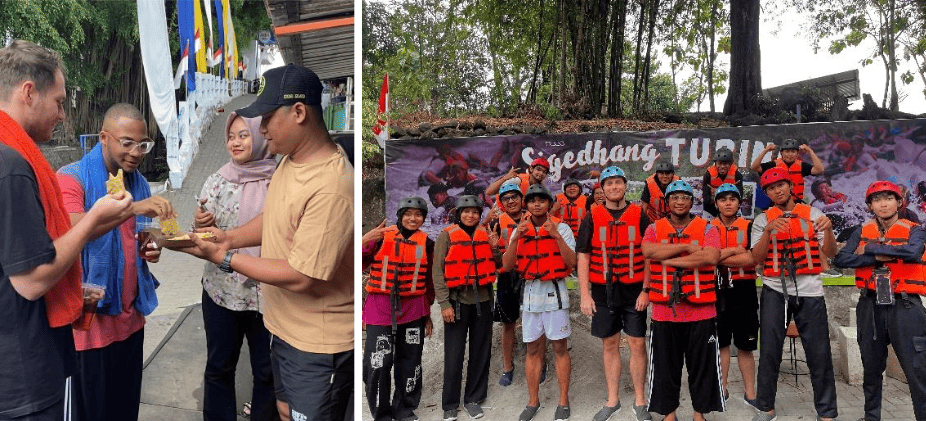
Figure 3 Guiding in Umbul Sigedhang
This full-day activity not only provided a practical opportunity but also tested the staff’s courage in using English directly. Both international students expressed positive impressions of the effort. Maciej called the experience “very enjoyable and highly recommended,” while Ali Ahmed described the staff’s enthusiasm for learning English as “inspirational.”
Through this practice, the English for Tourism program showed real impact: staff felt they were given an opportunity to practice their English, they also gained confidence in guiding international tourists, and strengthened the village’s image as a tourism destination ready to compete internationally.
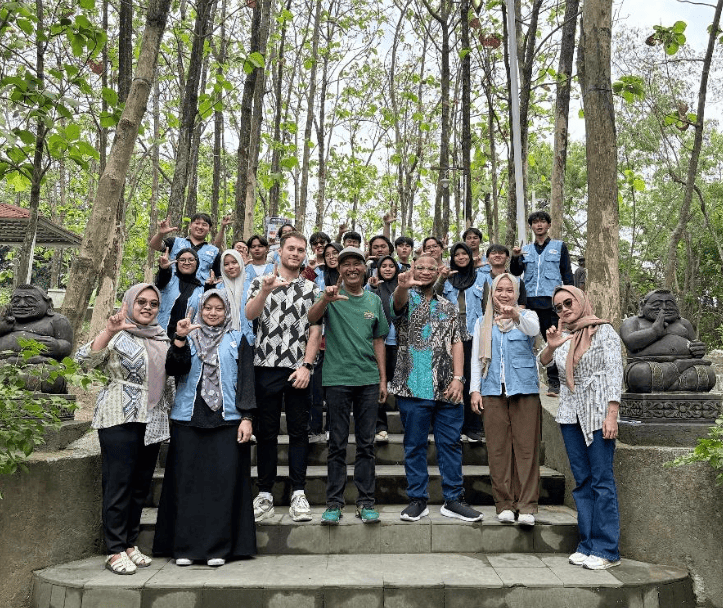
Figure 4 Head of Ponggok Village